
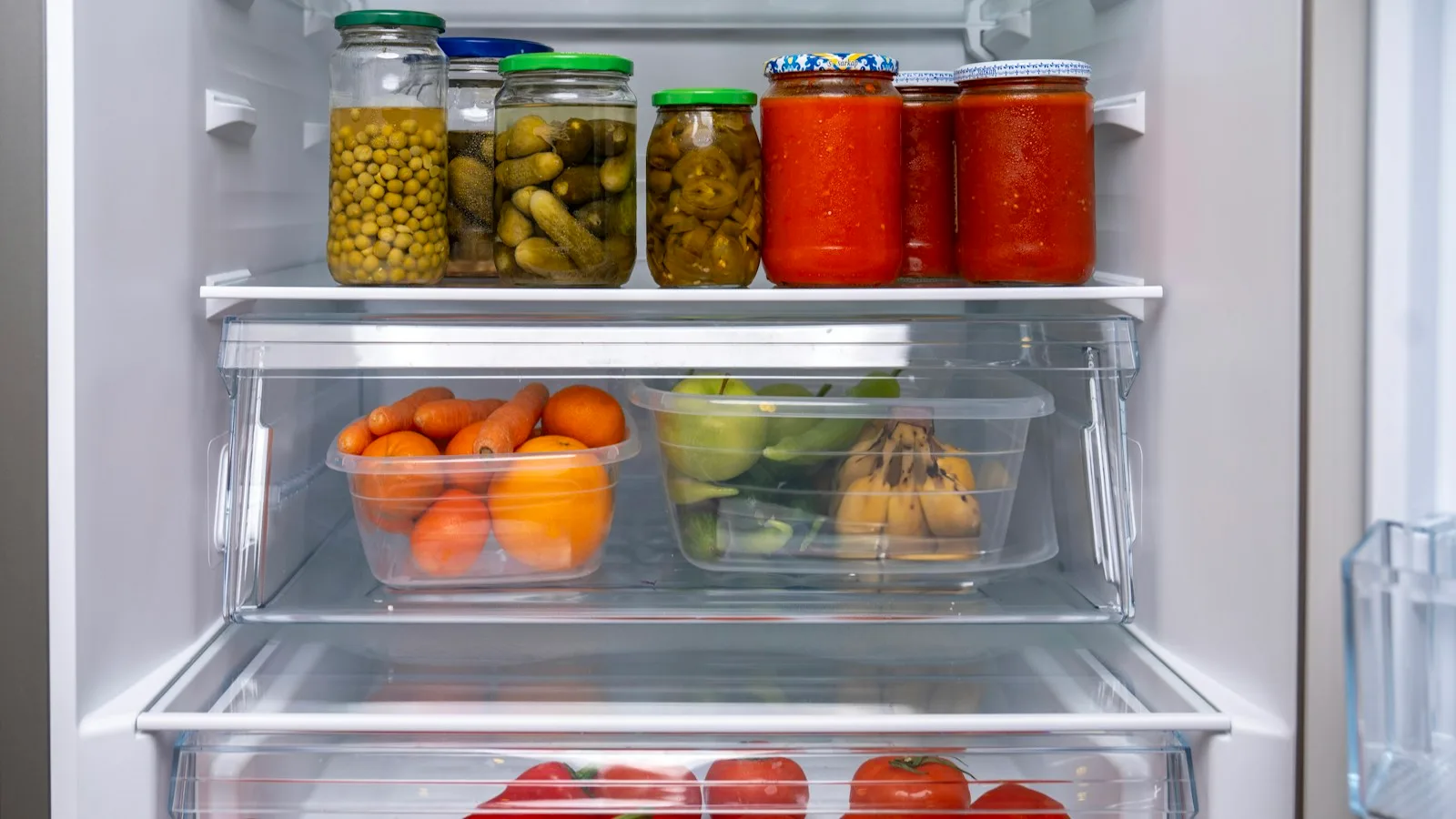
Short answer: for an ENERGY STAR full-size refrigerator rated 330–540 kWh per year, a 1,024 Wh power station delivers roughly 14 to 23 hours on its own, assuming 85% inverter efficiency and nothing else plugged in. Older or larger fridges, hot kitchens and frequent door openings shorten that. Your fridge’s EnergyGuide label gives you the number you need.
Why the answers online disagree
Search this question and you’ll find wildly different answers for the same battery size. Even brands disagree with themselves: one guide estimates about 7 hours for a 1,024 Wh unit, while another, from a different regional site of the same brand, says “well over 24 hours.” Both can be right for different fridges. The gap comes from three assumptions:
- Nameplate watts vs actual average watts. A fridge rated 150 W does not draw 150 W all day. The compressor cycles. Virginia Tech Extension’s energy guide suggests dividing a fridge’s plugged-in time by three to estimate full-power hours.
- Fridge size and age. ENERGY STAR notes that refrigerators over 15 years old can cost more than $80 a year to run, and that the most energy-efficient models are typically 16–20 cubic feet.
- Inverter losses. Some calculations ignore them; realistic ones subtract about 15%.

The method I recommend: use the EnergyGuide label
The yellow EnergyGuide label shows estimated yearly energy use in kWh. That figure already includes compressor cycling under standard test conditions, so it’s the most honest starting point you have.
Average watts = kWh per year × 1000 ÷ 8760
Runtime (hours) = Battery Wh × 0.85 ÷ Average watts
Power station runtime table for refrigerators
Calculated with 85% efficiency, fridge only. Yearly kWh values span the range found in ENERGY STAR certified full-size models.
| Fridge yearly use | Average watts | 512 Wh station | 1,024 Wh station | 2,048 Wh station |
|---|---|---|---|---|
| 330 kWh | 38 W | 11.6 h | 23 h | 46 h |
| 400 kWh | 46 W | 9.5 h | 19 h | 38 h |
| 540 kWh | 62 W | 7 h | 14 h | 28 h |
| 700 kWh (older or large model) | 80 W | 5.4 h | 11 h | 22 h |
The 700 kWh row is an illustration of an older or larger fridge, not a certified-product figure.
Do you need to run the fridge all the time?
Not necessarily. According to FoodSafety.gov, a refrigerator keeps food safe for up to 4 hours without power if the door stays closed. A full freezer holds for about 48 hours, a half-full one about 24 hours. Food above 40°F for more than 2 hours should generally be discarded.
That means you can run the fridge in blocks, for example a few hours on, a few hours off, to stretch a smaller battery, as long as you keep the door closed and watch the temperature with a fridge thermometer.
Don’t forget the startup surge
Capacity decides how long. The surge rating decides whether the compressor can start at all. Check that the power station’s surge (peak) rating covers your fridge’s startup spike. See Running vs Starting Watts.
Get your own number
Enter your fridge’s yearly kWh in the runtime calculator. If you want certainty, measure it for 24 hours with a plug-in power meter; these meters work with any standard 120 V plug-in device.
Deciding what to keep after the outage? See how long food lasts in a fridge without power.
Common mistakes
- Dividing the battery by the fridge’s nameplate watts. The compressor cycles, so the yearly kWh on the EnergyGuide label gives a far better average.
- Forgetting the inverter loss. Use about 85% of the power station’s rated Wh.
- Checking capacity but not the surge rating, then watching the unit shut off when the compressor starts.
- Running other loads from the same power station without adding them to the math.
- Opening the door often. Every opening lets cold air out, makes the compressor run longer and drains the power station faster.
When this doesn’t apply
- Old or very large fridges can use far more than the 330–540 kWh range in the table. Use your own label or measure.
- Separate freezers have their own EnergyGuide label. Add them as a separate line in the power station math instead of guessing, and remember a full freezer holds its temperature longer than a half-full one.
- Hot rooms make the compressor work harder, so expect less runtime than the table shows.
- Medications that need refrigeration: follow the drug label and ask your pharmacist or doctor; this guide is not medical advice.
FAQ
How long will a 2,000 Wh power station run a refrigerator?
About 28 to 45 hours for an ENERGY STAR full-size fridge rated 330–540 kWh per year. The math: 2,000 × 0.85 = 1,700 Wh usable; 330 kWh/year averages about 38 W and 540 kWh/year about 62 W, so 1,700 ÷ 62 ≈ 28 hours and 1,700 ÷ 38 ≈ 45 hours. A bigger power station mostly buys you time; it doesn’t change how the fridge behaves.
Can a 500 Wh power station run a refrigerator?
Often yes, for several hours, if its output and surge ratings handle the compressor. Use the table above as a guide.
Will the fridge use more power after the outage starts?
It can. A fridge that has warmed up runs its compressor longer to recover, and a hot room increases runtime too.
Should I run the freezer instead?
A full freezer holds food much longer on its own (about 48 hours with the door closed), so many people prioritize the refrigerator and keep the freezer shut.
Sources: ENERGY STAR certified refrigerators; ENERGY STAR “Flip Your Fridge”; FoodSafety.gov; Virginia Tech Extension, Estimating Appliance Energy Use; PowerOutage.us and Anker SOLIX UK for the conflicting estimates. Calculations by Lucas, Electrical Engineer. No products were tested for this article.